

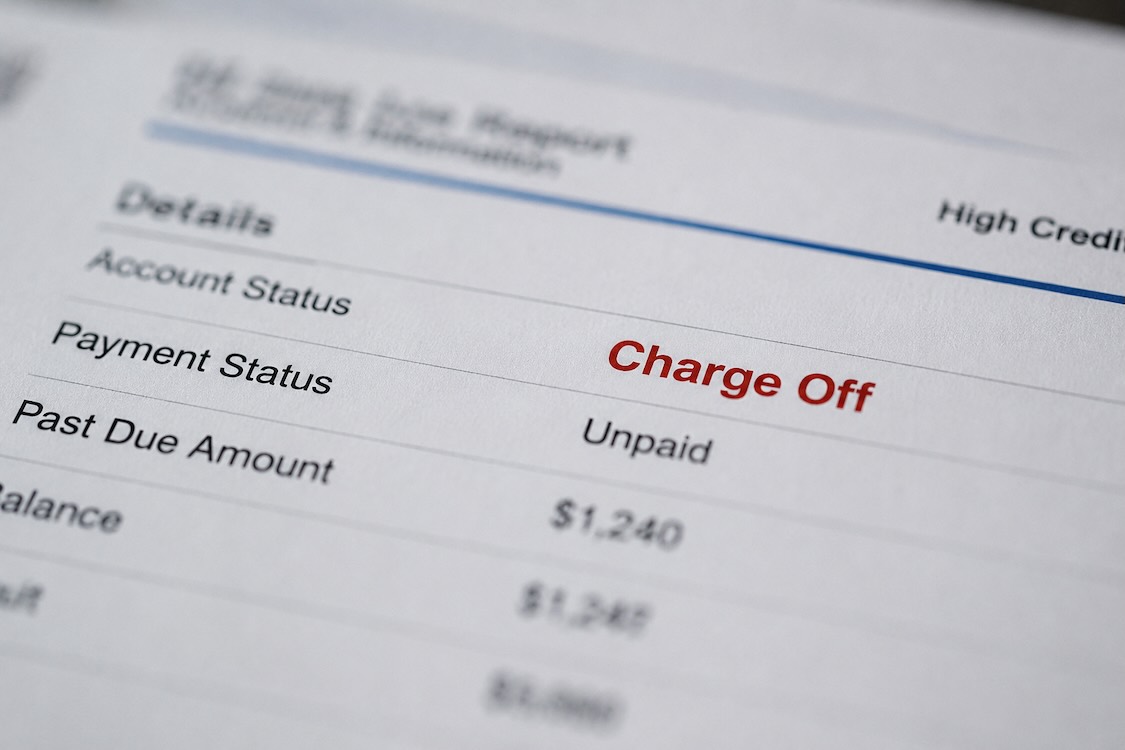
You were denied a credit card, and they sent you a credit report. When you saw it listed right there on the page, “charged off,” you were confused and ready to call someone, and then you wondered: Should you? What if that reminds them to come after you? What if the creditor has moved on? Do you still need to deal with this?
When the answer is not clear, Guardian Litigation Group is here to help you understand what a charge-off actually means, what it doesn’t mean, and what your options are.
Key Takeaways
- A charge-off is an accounting decision, not a legal one. It does not erase what you owe. Collectors can still contact you, negotiate, and sue you after a charge-off, and the balance can keep growing if interest and fees continue to accrue.
- Your debt is often sold to a third party after it is charged off. The original creditor may sell the account for a fraction of what you owe, and the buyer holds the full legal right to collect the entire original balance, even if you never dealt with that company before.
- A charge-off can stay on your credit report for up to seven years. That clock runs from the date of first delinquency, and paying the debt in full afterward does not remove the notation early or shorten that window.
- The statute of limitations does not erase the debt either. Once that window closes, a collector generally cannot win a lawsuit over it, but a payment or written acknowledgment can restart the clock entirely in many states, which is why responding before you understand your situation is risky.
- Canceled debt can create a tax bill. If a creditor cancels $600 or more, it may issue a form reporting that amount as taxable income, which means you could owe taxes on money you never actually received.
What Is a Charge-Off on Debt?
A charge-off is an internal accounting decision, not a legal one. When a borrower stops making payments, federal guidelines require creditors to write off the account after a set period of nonpayment. The creditor writes the balance off its books and reports the account to the credit bureaus as charged off.
Does a Charge-Off Eliminate the Debt?
No. A charge-off does not affect whether you legally owe the money. Under the Fair Debt Collection Practices Act, collectors retain the ability to contact you, negotiate with you, and sue you after a charge-off. The balance does not disappear. In many cases, it grows because interest and fees may continue to accrue after the charge-off, depending on the terms of your original agreement.
What Happens to the Debt After a Charge-Off?
After charging off a debt, the original creditor often sells the account to a third-party debt buyer for a fraction of what you owe. That buyer now owns your debt and holds the full legal right to collect the entire original balance from you. You may stop hearing from your original creditor entirely and then start receiving letters or calls from a company you have never encountered. That company purchased your account, and it has every collection tool your original creditor had.
What Is the Charge-Off Meaning on a Credit Report?
A charge-off causes serious damage to your credit profile. Under the Fair Credit Reporting Act, a charge-off can remain on your credit report for up to seven years from the date of first delinquency. Paying the debt in full after the charge-off does not remove the notation from your report. It stays for the remainder of that seven-year window and affects your ability to qualify for housing, auto loans, and new credit.
The Statute of Limitations: What It Does and Does Not Do?
Every state sets a statute of limitations on debt, which is the window during which a creditor or collector can file a lawsuit to collect. Once that window closes, typically between three and six years, depending on your state and debt type, a collector generally cannot obtain a court judgment against you.
The tip most people miss: The statute of limitations does not erase what you owe. A collector can still contact you and ask you to pay. In many states, if you make even a partial payment or acknowledge the debt in writing, that clock restarts entirely, which is why responding to a collector before you understand exactly where you stand is a serious risk.
What Is the Tax Consequence Most People Do Not See Coming?
If a creditor cancels $600 or more of a debt, the IRS requires the creditor to issue you a Form 1099-C, reporting the canceled amount as taxable income. That means you may owe income taxes on money you never actually received.
What Steps Should You Take If You See a Charge-Off on Your Credit Report?
A charge-off is not the end of the road, but every step you take after seeing one matters. Acting too quickly, or without the right information, can make your situation significantly harder to resolve.
Instead:
- Verify the debt before you respond to anyone. You have the right to request written verification of any debt within 30 days of a collector’s first contact. Confirm the debt is valid and the amount is accurate before you pay or acknowledge anything.
- Check the dates carefully. The date of first delinquency determines how long the charge-off can legally stay on your credit report and whether the statute of limitations has run in your state.
- Dispute inaccurate information. If a charge-off appears on your report with incorrect dates, amounts, or account details, you have the right to dispute it with the credit bureaus, and they are required to investigate.
- Talk to an attorney before you pay or respond. Charged-off debt can sometimes be settled for less than the full balance, but approaching that negotiation incorrectly can restart timelines you do not want restarted.
Taking the right steps in the right order is the difference between resolving charged-off debt still owed on your terms and ending up on the wrong end of a lawsuit with no plan in place.
Why Can I Trust Guardian Litigation Group to Answer What a Charge-Off On Debt Is?
Guardian Litigation Group has been in the business of untangling exactly these situations since 2018. The firm operates in 47 states, employs more than 30 attorneys, and has resolved more than $900 million in debt for clients who came in confused, overwhelmed, and unsure what the paperwork on their kitchen table actually meant. We are BBB accredited and a member of the National Association of Consumer Advocates. Guardian works only for consumers, never the other side. The firm charges nothing until a debt is settled, and every client has attorney-backed representation included in their program, which means if the situation escalates into a lawsuit, they are not starting from scratch. The Ramsey Show named Guardian its exclusive national law firm for debt-related matters, and that endorsement reflects the group’s dedication to helping its clients start fresh.
Don’t Let a Charge-Off Define Your Financial Future. Talk to Us Today.
Debt collectors count on consumers not knowing the difference between a creditor’s accounting decision and a legal obligation. Call Guardian Litigation Group today at 949-359-7960 or contact us online to schedule your free consultation and make sure you are not that person for them.
Frequently Asked Questions
+
+
+
+
+
+
Legal References Used to Inform This Page:
To ensure the accuracy and clarity of this page, we referenced official legal and other resources during the content development process:
- Fair Debt Collection Practices Act, 15 U.S.C. § 1692c
- Fair Credit Reporting Act, 15 U.S.C. § 1681c
- Can Debt Collectors Collect a Debt That’s Several Years Old? Consumer Financial Protection Bureau
- Topic No. 431, Canceled Debt, Internal Revenue Service
- Fair Debt Collection Practices Act, 15 U.S.C. § 1692g