

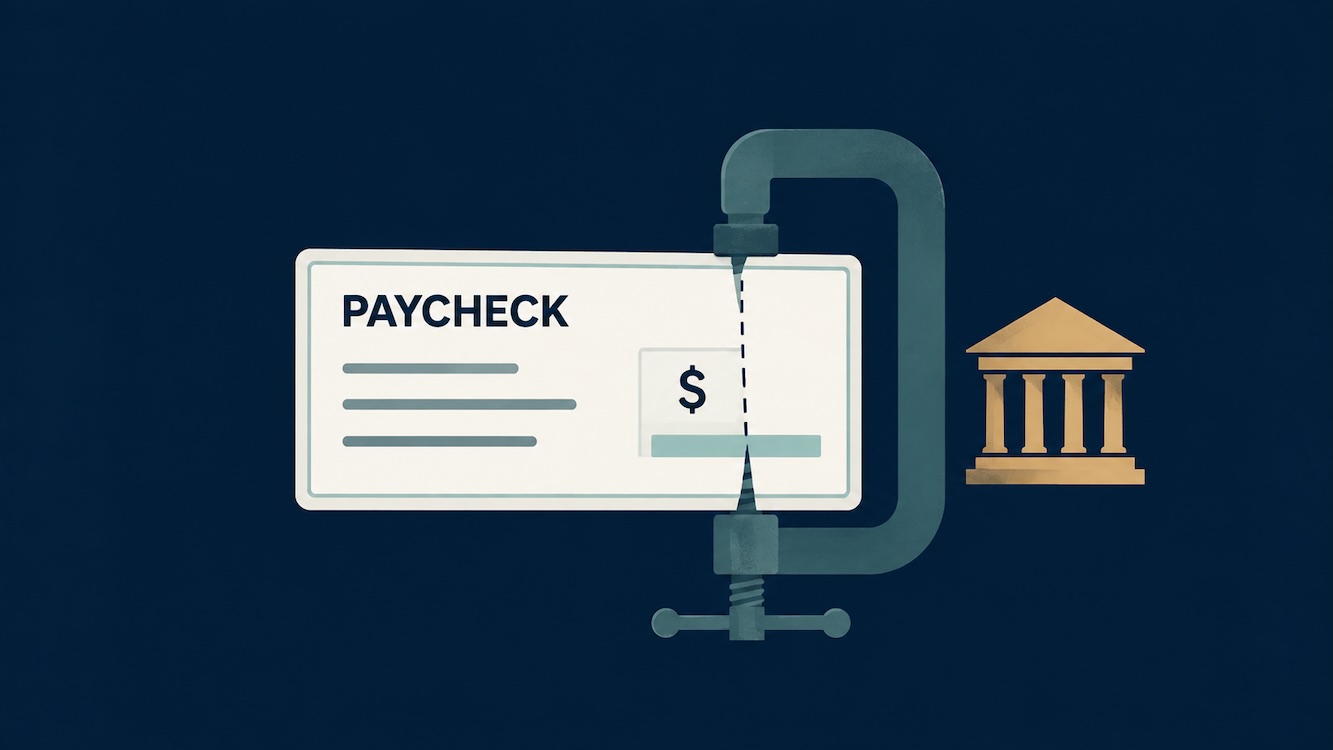
You expected this payday to catch you up. Instead, your paycheck arrived short, and a call to payroll revealed that a creditor had started taking money directly from your wages. Now you are staring at the same stack of bills with less money to pay them, wondering whether the creditor had the right to do this and whether the next paycheck will look the same.
Guardian Litigation Group understands the uncertainty you face and is here to help you move toward a solution that protects your future, not just your next paycheck.
Key Takeaways
- A court judgment is usually required first. Most consumer debt collectors cannot garnish your wages until they have a judgment against you. Child support, some tax debts, and some federal student loans follow different legal procedures.
- Federal law caps how much can be taken. Creditors may generally garnish the lesser of 25% of your disposable earnings or the amount by which your earnings exceed 30 times the federal minimum wage. State law may set stricter limits.
- The lawsuit, not the garnishment notice, is often the real turning point. Ignoring a summons or missing a response deadline can lead to a default judgment, which opens the door to garnishment and other collection tools.
- Changing jobs does not end a valid garnishment. A creditor with an active judgment can generally continue collecting after you switch employers. Addressing the underlying debt is usually more effective than waiting the garnishment out.
- Options still exist after garnishment begins. Depending on your situation, you may be able to challenge the garnishment, claim an exemption, negotiate a settlement, or consider bankruptcy.
Can a Debt Collector Garnish Your Wages Without Going to Court?
Usually, no. In most consumer debt cases, a creditor or debt collector must first obtain a court judgment before your employer can withhold money from your paycheck. Certain debts, including child support, some tax debts, and some federal student loans, follow different legal procedures established by law.
How Does Wage Garnishment Debt Collection Work?
Wage garnishment follows a legal process rather than a single collection letter. Although the exact procedure varies by state, most consumer debt cases follow a similar path, such as:
- The creditor files a lawsuit;
- The court enters a judgment after the creditor proves its claim, or if you fail to respond;
- The creditor requests a garnishment order under state law;
- Your employer withholds part of your disposable earnings; and
- The withheld money goes toward the judgment.
Although the process may vary by state, creditors generally cannot skip these legal steps before seeking wage garnishment on most consumer debts.
How Much of Your Paycheck Can Be Taken?
Federal law places limits on most wage garnishments for ordinary consumer debts. In many situations, creditors may garnish the lesser of 25% of your disposable earnings or the amount by which your disposable earnings exceed 30 times the federal minimum wage. States may provide greater protection than federal law, so your state’s limits may be lower.
Federal limits do not apply equally to every type of debt. Child support, certain tax debts, federal student loans, and some bankruptcy proceedings follow different rules.
The Mistake That Costs People Their Paychecks
Here is what many articles leave out: the garnishment notice often is not the first document that matters.
In many cases, the lawsuit created the best opportunity to prevent wage garnishment. If you ignore the summons or miss the deadline to respond, the court may enter a default judgment. After that happens, creditors often gain additional collection tools, including wage garnishment when state law allows it.
Even after garnishment begins, acting promptly may still create opportunities to challenge the judgment, negotiate a resolution, or limit additional collection efforts, depending on your circumstances.
Will Your Employer Know About the Garnishment?
Yes. Your employer generally learns about a wage garnishment because the order directs payroll to withhold part of your wages and send those funds as required by law. While many people worry that a garnishment will affect their job, an employer’s role typically is limited to processing the court order and making the required deductions. Federal law also protects many employees from being discharged because their earnings are subject to garnishment for a single debt, although states may provide additional protections.
Although receiving a garnishment order can feel overwhelming, addressing the underlying judgment or debt as early as possible may help prevent future collection problems.
Can Wage Garnishment Continue If You Change Jobs?
Changing jobs does not automatically end a wage garnishment. If a valid court judgment remains in effect, a creditor may take additional legal steps to continue collecting from your wages after you begin working for a new employer. Whether that happens depends on the debt collector garnishment laws of the state where the judgment was entered and the procedures available to the creditor.
For many people, changing employers only delays the issue. Addressing the judgment itself often provides a more effective long-term solution than hoping the garnishment will end on its own.
How to Stop Wage Garnishment After It Begins?
Acting quickly often preserves more legal options than waiting until additional paychecks are garnished.
Depending on your circumstances, you may be able to:
- Challenge the garnishment. If the creditor failed to follow the required legal procedures, you did not receive proper notice of the lawsuit, the amount exceeds legal limits, or the debt has already been paid or settled, you may have grounds to challenge the garnishment.
- Claim an exemption. Some states allow exemptions that protect part or all of your income, including claims based on financial hardship.
- Negotiate a settlement. Resolving the debt through a settlement agreement may stop future wage garnishment, depending on its terms.
- Consider bankruptcy. In some situations, filing for bankruptcy may stop wage garnishment through the automatic stay.
No single solution works for every case. An attorney can evaluate the debt collector garnishment laws that apply to your situation and determine whether the creditor followed the required procedures.
Contact Guardian Litigation Group to Find Out If a Debt Collector Can Garnish Your Wages
If you are reading this at midnight, trying to figure out your options, that is exactly the person Guardian Litigation Group was built to help. The firm represents consumers exclusively, has done so since 2018, and has resolved more than $900 million in debt for more than 55,000 people across 47 states. What separates Guardian from a debt settlement company is not just scale. It is that legal representation is included from the start.
Our attorneys have seen every collection tactic in use. When a creditor crosses the line into harassment or illegal conduct, Guardian’s in-house consumer protection team can turn that into a claim that works in your favor. You do not have to figure this out alone, nor face it without a lawyer.
Protect Your Paycheck Before You Run Out of Options
Every day matters once a creditor starts the garnishment process. Contact Guardian Litigation Group online today or call 949-359-7960 for a free consultation and learn what legal options may help you protect your income and move toward a stronger financial future.
Frequently Asked Questions
+
+
+
+
+
+
Legal References Used to Inform This Page:
To ensure the accuracy and clarity of this page, we referenced official legal and other resources during the content development process: